Tentacle Yaoi: History, Meaning, and Its Place in BL Culture
Introduction
Tentacle yaoi is a niche fictional subgenre found within Japanese manga, anime, and fan-created works that combines Boys’ Love (BL) themes with fantasy creatures that have tentacles. While it is not a mainstream part of BL, it has gained attention because of its unusual storytelling style and its connection to fantasy and horror elements. The genre developed from broader Japanese manga traditions and is mainly discussed within fandom communities rather than the commercial publishing industry. Understanding its history, creative influences, and audience helps readers separate internet myths from verified information and appreciate its place in manga culture.
What Is Tentacle Yaoi?
Tentacle yaoi refers to fictional works that combine male-male romance or mature BL themes with fantasy creatures featuring tentacles. The term joins two concepts: “yaoi,” traditionally associated with male romantic or mature relationships in manga, and “tentacle,” a fantasy element inspired by fictional monsters or sea creatures. Today, the Japanese publishing industry usually prefers the broader term “BL” (Boys’ Love), while “yaoi” remains widely recognized by international fans. Because this subgenre belongs to fantasy fiction, its stories often feature supernatural settings, magical creatures, or science fiction worlds rather than realistic situations.
The History Behind the Genre
Early Origins in Japanese Manga
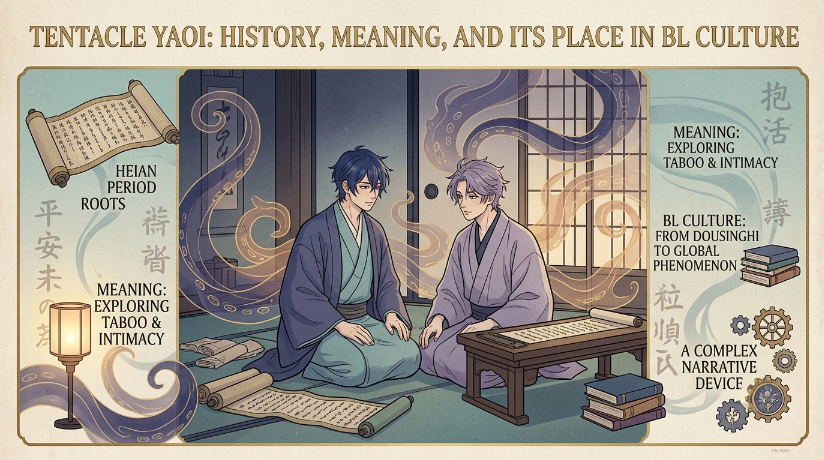
The roots of tentacle-themed fiction can be traced back to Japanese artistic traditions and later manga history. Fantasy creatures with tentacles appeared in manga long before they became associated with adult-themed stories. During the 1970s and 1980s, some creators experimented with monster-based fantasy narratives that later influenced the development of the subgenre. Artist Toshio Maeda became one of the most widely recognized figures connected with tentacle-themed manga, helping popularize the concept internationally through his work during the 1980s.
Connection with Boys’ Love
Boys’ Love itself emerged during the 1970s as a category of manga focusing on relationships between male characters. Over time, creators explored many storytelling styles, including romance, drama, comedy, historical fiction, fantasy, horror, and science fiction. Tentacle yaoi developed as one of many fantasy-focused branches rather than representing the genre as a whole. Most BL titles have no connection to tentacle themes, making this a relatively small and specialized niche within a much larger publishing category.
Common Themes and Storytelling Style
Unlike traditional romance stories, works in this niche often rely heavily on fantasy world-building. Readers may encounter mythical creatures, magical kingdoms, demons, aliens, sea monsters, or supernatural beings. These fictional settings allow creators to explore imaginative scenarios that would not fit realistic storytelling.
Many stories also include dramatic conflicts, emotional relationships, adventure, mystery, or horror alongside romantic elements. Because of these fantasy settings, readers generally approach the genre as imaginative fiction rather than realistic representation. Different creators emphasize different aspects, with some focusing more on plot and world-building than on romance.
How It Differs from Mainstream BL
A common misunderstanding is that all BL stories include unusual fantasy themes. In reality, mainstream BL covers an enormous variety of genres, including school life, workplace romance, family drama, slice-of-life stories, historical fiction, sports, and fantasy.
Tentacle yaoi differs because it combines BL storytelling with creature-based fantasy. This makes it far less common than standard romance-focused titles. Modern publishers typically categorize works under the broader “BL” label instead of using older terminology, although international communities still recognize both names.
Popularity Around the World
The internet played a major role in introducing Japanese manga and BL culture to international audiences. Online communities, fan translations, discussion forums, and digital reading platforms helped readers discover many niche genres that were previously available only in Japan.
Although this particular subgenre remains relatively small compared to mainstream BL, it has developed a dedicated international fan base interested in fantasy storytelling. Fans often discuss artwork, character design, world-building, and creative imagination rather than viewing the genre as representative of all Boys’ Love content.
Why the Genre Generates Discussion
One reason this niche receives attention is its unusual blend of romance, horror, mythology, and fantasy. Readers unfamiliar with Japanese manga culture often encounter the term online and become curious about its meaning.
Scholars and cultural commentators have also examined how fantasy has been used in manga over several decades. Discussions frequently focus on artistic history, censorship, changing publishing practices, and the evolution of BL terminology rather than only the stories themselves. These conversations help place the genre within the wider history of Japanese comics instead of viewing it in isolation.
Is Tentacle Yaoi Still Relevant Today?
While newer BL titles usually focus on contemporary romance, emotional storytelling, or character development, niche fantasy works continue to attract dedicated readers. Digital publishing has made it easier for independent creators and fan communities to share specialized content with audiences worldwide.
At the same time, the publishing industry increasingly uses “BL” as the preferred umbrella label. As a result, many newer readers become familiar with the broader category before learning about older or more specialized terms such as tentacle yaoi. This reflects how language and publishing trends continue to evolve within manga culture.
Conclusion
Tentacle yaoi is a specialized fictional subgenre within the broader world of Boys’ Love manga and anime. Its combination of fantasy creatures, supernatural settings, and male-centered relationships makes it very different from mainstream BL stories. Although relatively uncommon, it remains an interesting part of manga history and demonstrates how creative storytelling continues to evolve across different genres. Understanding its origins, historical development, and place within Japanese popular culture provides readers with a more accurate picture of this unique niche instead of relying on common internet misconceptions.
Myreadignmnaga is your trusted destination for detailed manga platform reviews, expert website analysis, emerging tech trends, and practical online guides. Every article is created to provide accurate, reader-friendly, and valuable information you can rely on.
FAQs
1. What does tentacle yaoi mean?
Tentacle yaoi is a niche fictional BL subgenre that combines male-male relationships with fantasy creatures featuring tentacles, usually in supernatural or science-fiction settings rather than realistic stories.
2. Is tentacle yaoi the same as Boys’ Love?
No. Boys’ Love is a broad category covering many romance genres, while tentacle yaoi represents only one small fantasy-focused niche within that larger category.
3. Where did this genre originate?
Its roots are found in Japanese manga history, where fantasy monster themes and the development of BL storytelling gradually influenced the creation of this specialized subgenre.
4. Why is the term “BL” used more often today?
Modern publishers generally use “BL” as the standard umbrella term for male-male romance stories, while “yaoi” remains more common among international fans and older discussions.
5. Is tentacle yaoi considered mainstream?
No. It is a relatively small niche within the much larger Boys’ Love category, with mainstream BL primarily focusing on romance, drama, slice-of-life, fantasy, and other storytelling styles.